
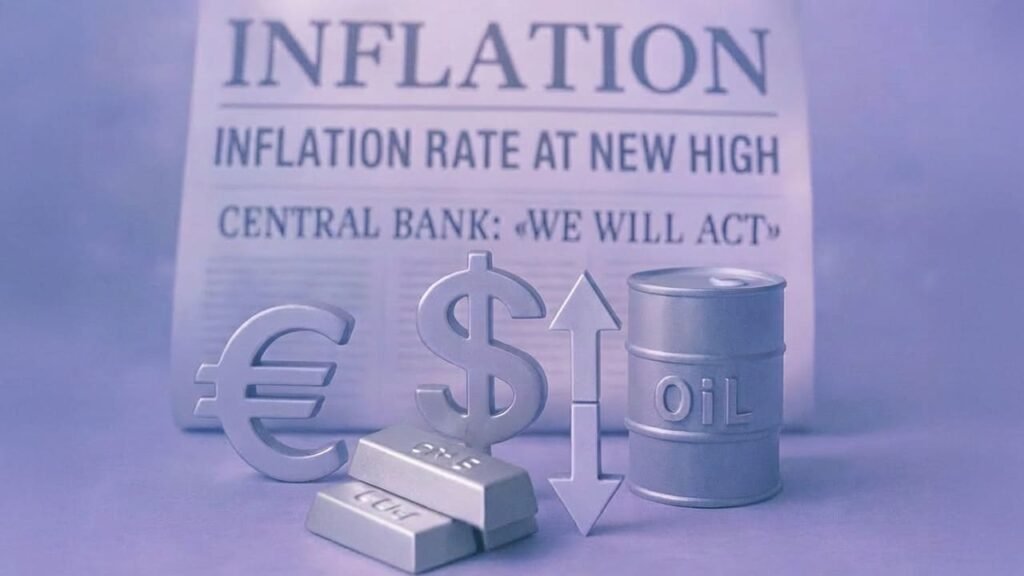
Inflation is one of the most important economic factors that affect the global financial markets, particularly currencies and commodities. When inflation rises or falls, it has significant repercussions on the value of currencies and the price movements of commodities like gold, oil, and agricultural products.
In this article, we’ll explore the relationship between inflation and asset prices, and why understanding inflation is crucial for forex and commodity traders in 2026 and beyond.
- What Is Inflation?
Inflation refers to the rate at which the general price level of goods and services rises, leading to a decline in the purchasing power of money. It is typically measured by consumer price indices (CPI) or producer price indices (PPI), both of which track changes in the cost of a basket of goods and services over time.
While a moderate level of inflation is considered a natural part of a growing economy, high inflation can lead to economic instability, while deflation (negative inflation) can signal a slowing economy.
- The Impact of Inflation on Currency Prices
Inflation plays a significant role in shaping currency value. In forex trading, understanding inflation and its relationship with interest rates is key to anticipating market movements.
2.1. Central Banks and Interest Rates
Central banks, such as the Federal Reserve in the U.S., the European Central Bank (ECB), and the Bank of England (BoE), typically control inflation through monetary policy. When inflation is high, central banks may increase interest rates to slow down the economy and bring inflation under control.
- Higher Interest Rates = Stronger Currency:
When a central bank raises interest rates to combat high inflation, its currency generally appreciates because higher rates attract foreign investment, increasing demand for the currency. - Lower Interest Rates = Weaker Currency:
Conversely, when a central bank lowers interest rates to stimulate a sluggish economy, the currency tends to depreciate as investors seek better returns elsewhere.
Example:
If the U.S. Federal Reserve raises rates to combat inflation, the U.S. dollar (USD) may appreciate against other currencies, as investors seek the higher yields offered by U.S. assets.
2.2. Inflation and Real Interest Rates
The real interest rate is the nominal interest rate minus the inflation rate. If inflation is higher than nominal interest rates, the real return on investments becomes negative, leading to a depreciation of the currency.
- Example:
If the nominal interest rate is 2% and inflation is 3%, the real interest rate is negative, discouraging investment in that country’s assets, which can lead to a weaker currency.
- The Impact of Inflation on Commodity Prices
Inflation doesn’t just affect currencies; it also plays a pivotal role in the pricing of commodities like gold, oil, silver, and agricultural products. Commodities are often seen as a hedge against inflation, and their prices can rise or fall based on inflationary pressures.
3.1. Commodities as Inflation Hedges
- Gold and Silver:
Gold, in particular, is considered a safe-haven asset during times of inflation. When the purchasing power of fiat currencies decreases due to rising inflation, investors often turn to gold as a store of value.
Example:
In periods of high inflation, the price of gold tends to rise as investors seek a stable asset that holds value over time.
- Oil:
Oil is a critical commodity in the global economy, and its price is closely tied to inflation. As inflation rises, the cost of production and transportation also increases, leading to higher oil prices. Additionally, oil price increases contribute to inflation in the broader economy.
Example:
Crude oil prices often surge when inflation expectations rise, as the cost of producing and transporting oil increases, adding pressure to the global supply chain.
3.2. Supply and Demand Factors
Commodity prices can also be affected by supply and demand dynamics, which inflation can influence. For example, rising inflation can lead to higher costs of raw materials, labor, and transportation, all of which can drive up commodity prices.
3.3. Agriculture and Food Prices
Inflation also affects agricultural commodities. Rising prices for labor, fuel, and fertilizers increase the cost of farming, leading to higher prices for crops like wheat, corn, and soybeans.
Example:
As inflation pushes up the costs of farming and shipping, food prices may rise, impacting both consumers and traders.
- How Traders Can Navigate Inflation’s Impact
Understanding the relationship between inflation and both currency and commodity prices can help traders position themselves for success in volatile economic environments. Here are some strategies to consider:
4.1. Focus on Central Bank Decisions
Since central banks use interest rates to manage inflation, keeping a close eye on monetary policy statements and interest rate decisions is crucial. Traders should track inflation reports (CPI, PPI) and central bank speeches for signs of future rate hikes or cuts.
Example:
If inflation in the Eurozone is increasing, and the ECB is expected to raise interest rates, traders may look for opportunities to go long on EUR/USD.
4.2. Invest in Inflation-Hedging Assets
Gold, silver, and other precious metals are often seen as inflation hedges. Investing in these commodities can provide a safe store of value during periods of high inflation.
4.3. Trade Commodity Pairs
Commodity-linked currencies (like the Australian Dollar (AUD), Canadian Dollar (CAD), and Norwegian Krone (NOK)) often benefit from rising commodity prices. By trading these currency pairs, you can capitalize on the upward movement in oil, gold, or other key resources.
4.4. Use Futures Contracts and ETFs
Futures contracts on commodities or exchange-traded funds (ETFs) that track inflation-sensitive assets provide opportunities to trade commodities without the need for physical ownership.
- The Bottom Line
Inflation has a profound impact on both currencies and commodity prices. It shapes the decisions of central banks, influences investor behavior, and determines the value of goods and services globally. By understanding how inflation interacts with these markets, traders can gain a competitive edge in forecasting price movements and managing risk.
To navigate the effects of inflation, it’s essential for traders to stay informed about central bank actions, monitor inflation data closely, and use a combination of technical analysis and fundamental insights. Whether you’re trading forex, commodities, or stocks, understanding the role of inflation is vital for long-term success.
Want to stay ahead of inflation trends and their market impact? Join the Für-Trade newsletter for weekly updates on economic data, trading strategies, and insights into the forex and commodity markets.