
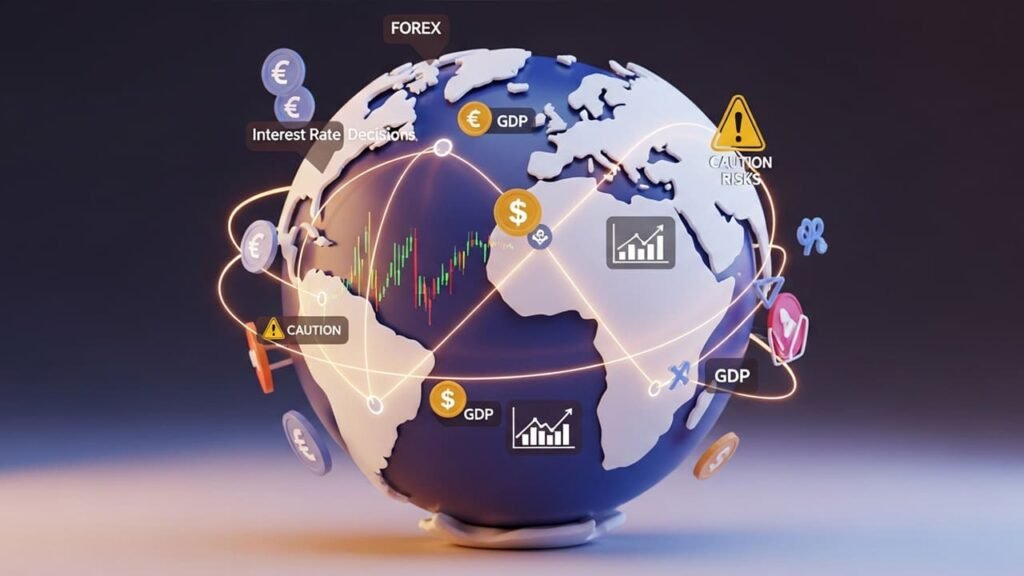
Global economic events can trigger significant market movements, influencing everything from currencies to commodities and stocks. For traders, staying ahead of these events is essential to making informed decisions and capitalizing on market volatility.
In this article, we’ll explore the most impactful economic events for traders in 2026, why they matter, and how to incorporate them into your trading strategy.
- Central Bank Interest Rate Decisions
Interest rate decisions from central banks such as the Federal Reserve (U.S.), European Central Bank (ECB), and Bank of England (BoE) are often the most market-moving events. Changes in interest rates can have a dramatic impact on currencies, stock markets, and commodities.
Why They Matter:
- Interest rate hikes usually strengthen the currency as higher rates attract foreign investment and drive demand for that currency.
- Interest rate cuts can weaken the currency as lower rates encourage borrowing and spending, making a currency less attractive to investors.
In 2026, major central banks are expected to navigate a balancing act — responding to inflation while managing economic growth. Traders need to watch for:
- Fed interest rate policy in the U.S. — particularly after a year of significant rate changes in 2025.
- ECB rate decisions as the Eurozone economy continues its recovery and the central bank adapts to post-pandemic challenges.
How to Trade It:
- Follow central bank statements and speeches for forward guidance on future rate changes.
- Look for currency pairs like EUR/USD, GBP/USD, and USD/JPY, which react strongly to interest rate decisions.
- U.S. Non-Farm Payrolls (NFP)
Non-Farm Payrolls (NFP) is a key monthly economic indicator that measures the number of jobs added or lost in the U.S. economy, excluding the agriculture sector. It’s released on the first Friday of every month by the U.S. Bureau of Labor Statistics.
Why It Matters:
- NFP can give traders an indication of the overall health of the U.S. economy.
- Strong employment numbers usually signal economic expansion and are bullish for the U.S. dollar.
- Weak employment data can indicate economic contraction and be bearish for the dollar.
In 2026, NFP reports will continue to be an important indicator, especially if the U.S. economy shows signs of slowing down after several years of aggressive rate hikes. Traders should pay attention to wage growth within the NFP report, as it signals inflationary pressure.
How to Trade It:
- Use economic calendars to prepare for NFP releases.
- Expect high volatility in USD pairs (EUR/USD, GBP/USD) right after the NFP report.
- U.S. GDP Growth Reports
The Gross Domestic Product (GDP) report measures the total value of goods and services produced by a country and is a key indicator of economic health.
Why It Matters:
- Strong GDP growth is bullish for the U.S. dollar and global equity markets, while weak GDP growth can signal a recession or economic stagnation.
- In 2026, the U.S. is expected to recover further from pandemic-induced disruptions, but growth could moderate as global supply chain issues and inflation concerns linger.
How to Trade It:
- A strong GDP report could drive USD strength and positive momentum in U.S. stocks, particularly in consumer sectors.
- A weaker-than-expected GDP could lead to a sell-off in USD-based assets.
- Inflation Data (CPI, PPI)
Inflation reports, particularly the Consumer Price Index (CPI) and Producer Price Index (PPI), track the change in prices for goods and services. Central banks use inflation data to set their monetary policy, making these reports crucial for traders.
Why It Matters:
- High inflation can lead central banks to raise interest rates to cool the economy.
- Low inflation may prompt central banks to keep rates low or even lower them further, supporting economic growth.
How to Trade It:
- Monitor CPI and PPI reports from key economies like the U.S., EU, and China.
- Rising inflation in major economies usually leads to currency strength (like the USD or EUR), while low inflation could drive central bank easing and weaker currencies.
- Geopolitical Events and Crises
Political events, such as elections, trade wars, and military conflicts, have an immediate impact on global markets, especially currencies and commodities like oil and gold.
Why They Matter:
- Political instability can lead to flight-to-safety trades, with investors flocking to safe-haven assets like gold and the Swiss franc.
- A trade war (like the U.S.-China trade dispute) can affect global supply chains and trade, leading to sharp movements in commodity currencies and global equities.
How to Trade It:
- Stay informed about major geopolitical events using real-time news feeds and economic calendars.
- Safe-haven assets like gold (XAU/USD) and USD/CHF often perform well in times of uncertainty.
- Trade and Fiscal Policy Announcements
Trade negotiations, tariffs, and fiscal policy changes are important, especially in the context of global trade. In 2026, trade agreements between the U.S. and China, the U.K. and the EU, or other major economies could affect market sentiment.
Why It Matters:
- Trade agreements or disputes often move commodity currencies (like the AUD, CAD, and NZD) due to their links to global trade and commodity exports.
- Fiscal policies, such as government spending or tax changes, can affect bond markets and the value of national currencies.
How to Trade It:
- Watch for trade deals and tariff announcements that could shift currency pairs like USD/JPY or USD/CAD.
- Use fiscal policy changes to anticipate potential movements in government bonds and interest-sensitive currencies like AUD or NZD.
- Commodities and Energy Reports
Oil prices are particularly sensitive to geopolitical events, supply chain disruptions, and OPEC+ decisions. Since oil is priced in USD, movements in crude oil often affect the U.S. dollar and related commodity currencies.
Why They Matter:
- Strong oil prices often push commodity currencies higher (like CAD, AUD, NZD) as demand for these currencies rises.
- Energy disruptions, like pipeline blockages or political unrest in oil-producing regions, can spike commodity prices and trigger volatility in both forex and commodity markets.
How to Trade It:
- Monitor oil price movements and follow EIA reports (Energy Information Administration) for oil inventories.
- CAD pairs are particularly sensitive to crude oil prices — watch pairs like USD/CAD for oil-related volatility.
The Bottom Line
As we head into 2026, economic events will continue to drive volatility and influence forex and commodity markets. Traders who stay informed and develop strategies around key releases — from central bank decisions to GDP reports and geopolitical risks — will be better positioned to navigate uncertainty.
By understanding how each of these events impacts the market, you can plan your trades more effectively, manage risk, and capitalize on opportunities.
Want to stay ahead of global market events? Join the Für-Trade newsletter for weekly updates, expert analysis, and actionable trading strategies that keep you informed on the latest economic developments.