
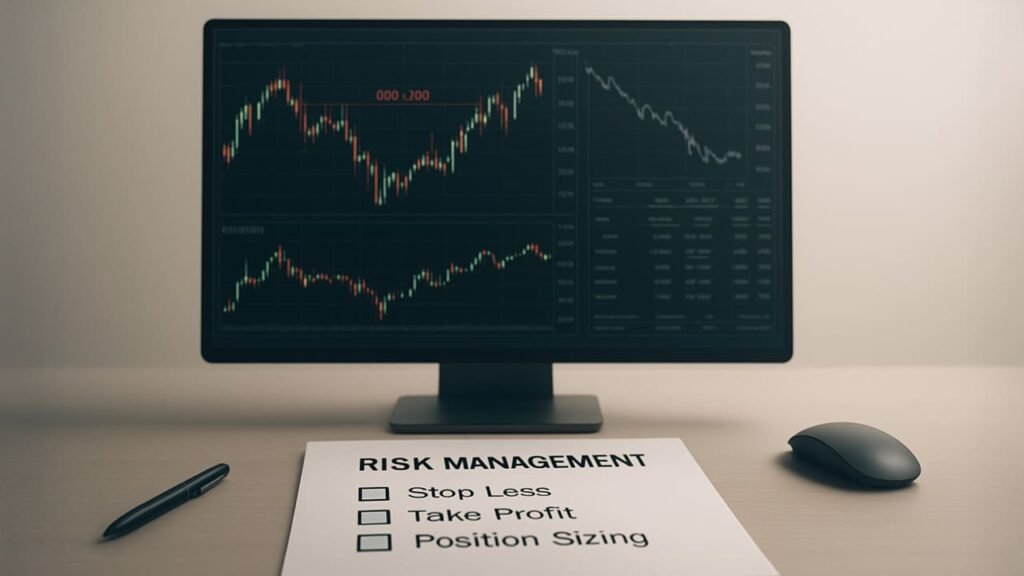
Risk management is a fundamental aspect of successful trading. In fact, it’s often said that trading is not about avoiding losses — it’s about controlling them. Whether you’re trading forex, stocks, or commodities, the key to long-term profitability lies in how well you manage risk.
In this article, we’ll explore the tools and strategies you can use to mitigate risk, protect your capital, and ensure that your trades align with your risk tolerance and overall strategy.
- What Is Risk Management in Trading?
Risk management refers to the process of identifying, assessing, and controlling the risks involved in a trade. It includes tools and techniques that help traders limit potential losses while maximizing their chances of success.
The ultimate goal of risk management is to ensure that no single trade or market event can wipe out your account. This is achieved by setting clear limits, defining trade sizes, and following disciplined strategies.
- Key Risk Management Tools
To help control risk effectively, traders rely on several core tools. Let’s take a look at the most important ones.
- Stop-Loss Orders
A stop-loss is a tool that automatically closes a trade when the price moves against you by a specified amount. The purpose of a stop-loss is to limit your potential loss on a trade by setting a predefined exit point.
Example:
If you buy EUR/USD at 1.1000 and set a stop-loss at 1.0950, the trade will automatically close if the price falls to 1.0950, limiting your loss to 50 pips.
- Types of Stop-Loss Orders:
- Fixed Stop-Loss: Set at a specific price level, often based on technical analysis or volatility.
- Trailing Stop-Loss: Moves with the market. If the price moves in your favor, the stop-loss moves with it, locking in profits while allowing room for further gains.
- Take-Profit Orders
A take-profit order is the opposite of a stop-loss. It automatically closes a position once the price reaches your desired profit level. This tool helps you lock in profits when the market moves in your favor.
Example:
If you buy GBP/USD at 1.3000 and set a take-profit at 1.3100, the trade will close once the price hits 1.3100, securing your 100-pip profit.
- Position Sizing
Position sizing refers to how much capital you risk on a single trade. It’s an essential component of risk management because it determines the potential impact of any loss on your portfolio.
- How to Calculate Position Size:
- Decide the percentage of your account you’re willing to risk per trade (e.g., 1% or 2%).
- Calculate the pip risk by subtracting the entry point from the stop-loss level.
- Determine position size using the formula:
[
\text{Position Size} = \frac{\text{Account Balance} \times \text{Risk Percentage}}{\text{Pip Risk} \times \text{Value per Pip}}
]
By calculating position size, you can ensure that no single loss will significantly affect your overall portfolio.
- Risk-to-Reward Ratio
The risk-to-reward ratio (R/R) measures the potential reward you stand to gain relative to the amount of risk you’re willing to take. A positive risk-to-reward ratio ensures that your profits outweigh potential losses over time.
How to Calculate R/R:
- Risk is the difference between your entry price and stop-loss.
- Reward is the difference between your entry price and take-profit.
Example:
If you enter a trade with a stop-loss of 50 pips and a take-profit of 150 pips, your risk-to-reward ratio is 1:3. This means for every dollar you risk, you’re aiming to gain three dollars.
Successful traders often look for setups with a risk-to-reward ratio of at least 1:2, meaning the potential reward is twice the potential risk.
- Hedging
Hedging involves opening positions in opposite directions to reduce risk. For example, if you hold a long position in EUR/USD, you might open a short position in USD/JPY to hedge against a potential decline in the euro’s value.
While hedging won’t necessarily increase profits, it can reduce overall exposure to market volatility, especially in uncertain or unpredictable market conditions.
- Risk Management Strategies
Successful traders combine risk management tools with well-thought-out strategies to protect their capital and ensure they don’t overexpose themselves. Here are some popular strategies:
- The 1% Rule
The 1% rule is a simple risk management strategy where you risk no more than 1% of your trading capital on any single trade. This means if your account balance is $10,000, you would risk a maximum of $100 per trade. This approach helps limit losses and ensures long-term sustainability.
- The 2% Rule
Similar to the 1% rule, the 2% rule allows you to risk 2% of your account balance per trade. Traders use this when they are comfortable with a slightly higher risk tolerance. While it provides more room for potential profit, it also increases the impact of a loss.
- Use of Leverage
Leverage allows you to control larger positions with a smaller amount of capital. However, excessive use of leverage can amplify both gains and losses. It’s essential to use leverage cautiously and avoid overexposing your account to avoid margin calls.
- Trading Only High-Probability Setups
Avoid trading based on emotions. Focus on setups that align with your strategic analysis — whether that’s based on technical patterns, fundamental data, or both. Trading only when conditions are favorable reduces the risk of impulsive, high-risk decisions.
- Why Discipline and Patience Are Key to Risk Management
The most important elements of risk management are discipline and patience. Even with the best tools, traders can undermine their strategy if they:
- Let emotions (like fear and greed) dictate decisions.
- Fail to follow their trading plan consistently.
- Overtrade or increase position size without a clear rationale.
Maintain Emotional Control:
Use risk management tools to avoid knee-jerk reactions to market movements. By sticking to your predetermined stop-loss and take-profit levels, you avoid the emotional temptation to make hasty decisions.
- The Bottom Line
Risk management is the foundation of successful trading. By using tools like stop-loss orders, take-profit levels, position sizing, and risk-to-reward ratios, you can control potential losses while maximizing your chances of success.
Implementing a disciplined approach to risk management will help you:
- Survive market downturns without catastrophic losses.
- Preserve your capital for future trades.
- Maximize your profits when favorable opportunities arise.
Risk Management Checklist for Traders
- Determine Your Risk Tolerance
- Understand how much risk you’re comfortable taking on each trade. Typically, this should be no more than 1–2% of your trading capital per trade.
- Use Stop-Loss Orders
- Always set a stop-loss order before entering any trade. This protects you from catastrophic losses if the market moves against you.
- Decide on the percentage or pip value for your stop-loss based on volatility or key support/resistance levels.
- Use Take-Profit Orders
- Define a take-profit point for every trade to lock in profits when the market reaches your desired level.
- Consider using a risk-to-reward ratio of at least 1:2 (i.e., for every $1 of risk, aim to make $2 in profit).
- Position Sizing
- Calculate position size according to your risk tolerance and the distance to your stop-loss.
- Avoid risking more than 2% of your account balance on a single trade.
- Diversify Your Trades
- Spread your risk across multiple currencies or asset classes. Don’t put all your capital into one trade or one market.
- Limit Leverage
- Use leverage cautiously. The more leverage you use, the greater your potential losses. Ensure that your leverage ratio aligns with your risk management strategy.
- Avoid Overtrading
- Resist the urge to trade excessively. Stick to your trading plan, and only take trades when the setup aligns with your strategy.
- Monitor Market News and Events
- Be aware of upcoming economic reports, central bank decisions, and geopolitical events that may influence market volatility. Adjust your risk exposure ahead of major events.
- Review Your Trades Regularly
- Keep a trading journal to document each trade, including entry/exit points, rationale, and emotions. This helps you learn from mistakes and refine your strategies over time.
- Keep Emotions in Check
- Emotional control is key to maintaining discipline. If you’re feeling frustrated or impulsive, take a step back. Wait for the market to settle before making decisions.
Pro Tip:
Regularly reviewing your risk management plan ensures that you’re sticking to it even when market conditions change or when you encounter periods of frustration or overconfidence.
This Risk Management Checklist is a great tool to print out or keep handy when trading. By following these simple steps, you can protect your capital and trade more responsibly, increasing your chances of long-term success in the markets.
Ready to trade smarter and protect your capital? Join the Für-Trade newsletter for expert trading tips, risk management strategies, and market insights every week.