
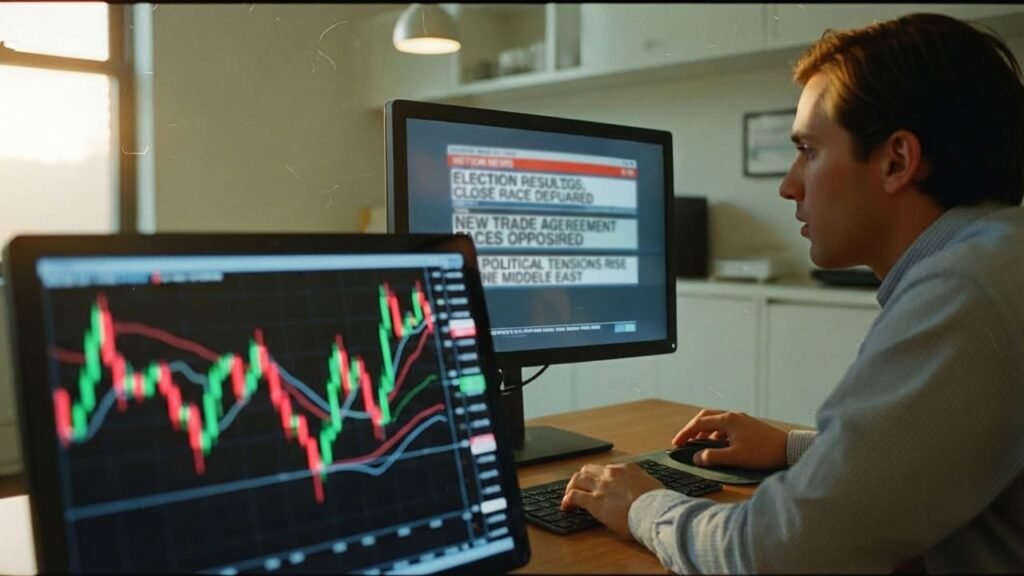
Political instability is one of the most significant risks in global markets. It can cause major price fluctuations, shift market sentiment, and lead to sudden volatility. Whether it’s elections, policy changes, trade wars, or geopolitical conflicts, political events have far-reaching consequences on the economy and financial markets.
In this article, we’ll explore how political instability affects markets and provide strategies to help you navigate these challenges effectively.
- What Is Political Instability?
Political instability refers to a situation where a government or region faces uncertainty, social unrest, or disruptive political events that could undermine the status quo. These events can include:
- Government changes (elections, coups, leadership shifts)
- Civil unrest (protests, strikes, riots)
- Geopolitical conflicts (trade wars, border disputes, military actions)
- Policy shifts (tax reforms, regulatory changes)
These factors can affect economic conditions, investor confidence, and financial markets.
- How Political Instability Affects Global Markets
Political instability creates uncertainty, and uncertainty is often the catalyst for market volatility. The key ways political events impact global markets include:
- Currency Fluctuations
When a country faces political instability, its currency is often one of the first assets to react.
- Political uncertainty can lead to a weaker currency as investors move capital away from riskier regions.
- Safe-haven currencies (like the Swiss Franc (CHF) and U.S. Dollar (USD)) tend to strengthen during times of geopolitical uncertainty, as investors flock to perceived stability.
Example: The Brexit referendum created significant volatility in the GBP/USD pair, with the British pound experiencing sharp declines when the Leave vote won.
- Stock Market Volatility
Stock markets are extremely sensitive to political developments:
- Political instability often leads to declines in stock prices due to increased uncertainty and reduced business confidence.
- Geopolitical tensions or trade wars can hurt international trade and corporate profits, leading to market sell-offs.
Example: The U.S.-China trade war created uncertainty that affected global equities, particularly those in the technology and manufacturing sectors.
- Interest Rate Changes
Political events can also influence central bank decisions, particularly when they impact economic growth or inflation.
- In uncertain political environments, central banks may lower interest rates to stimulate the economy or raise rates to combat inflation, both of which can have a significant impact on financial markets.
Example: In the U.S., the Federal Reserve may adjust rates in response to political pressures, particularly during election years or periods of fiscal policy changes.
- Commodity Price Fluctuations
Certain political events can directly influence the prices of commodities, especially in politically sensitive regions:
- Oil prices can skyrocket during conflicts in the Middle East or any region crucial to global oil supply.
- Gold and other safe-haven assets tend to appreciate during periods of political instability, as investors seek stability.
Example: Tensions in the Middle East or disruptions to supply chains due to political events can lead to spikes in oil prices or gold prices.
- Navigating Political Instability in Global Markets
While political instability poses risks, it also creates opportunities for traders who understand how to manage these conditions. Here’s how to navigate the impact of political instability on your trading:
- Stay Informed and Monitor Political Events
The first step to navigating political instability is to stay well-informed. Track important events, elections, trade negotiations, and political developments using:
- Economic calendars
- News sources
- Social media feeds from credible financial analysts and economists
- Use Risk Management Strategies
In volatile markets, risk management is crucial. Consider these strategies:
- Use stop-loss orders to protect against large losses.
- Position sizing should be smaller during times of high uncertainty to reduce exposure.
- Diversify your portfolio to reduce risk concentration in politically sensitive assets.
- Look for Safe-Haven Assets
During times of political uncertainty, consider shifting a portion of your portfolio into safe-haven assets:
- Gold, U.S. Dollar, and Japanese Yen are popular during global instability.
- Government bonds from stable countries like the U.S., Germany, or Switzerland can offer more security.
- Trade the News (Carefully)
Trading based on news releases can be profitable, but it’s risky during periods of political instability. News trading requires quick decision-making and can be highly volatile.
- Focus on major announcements that directly affect markets, such as elections, policy shifts, or geopolitical escalations.
- Wait for volatility to settle before entering positions, especially after major announcements.
- Focus on Long-Term Trends
For longer-term traders, political instability may present buying opportunities in fundamentally strong assets that are temporarily undervalued.
- Use fundamental analysis to assess whether a political event is likely to have a long-term impact on the market or is just a short-term disturbance.
- Patience is key — often, markets recover after the initial reaction to political events.
- Example of Political Instability in Action
Let’s take a look at two major historical events to see how political instability can affect global markets:
Example 1: Brexit (2016)
- Impact on GBP/USD: The Brexit referendum led to a dramatic drop in the British pound, as investors feared the economic consequences of the UK leaving the European Union.
- Market Reaction: The pound lost about 10% of its value against the U.S. dollar in just a few days after the vote to leave the EU was confirmed.
Example 2: U.S.-China Trade War (2018–2020)
- Impact on Global Markets: Tensions between the U.S. and China created volatility in global stock markets, particularly affecting tech companies and supply chains.
- Impact on Commodities: The trade war also caused significant fluctuations in commodity prices, particularly soybeans and oil, as tariffs impacted trade flows.
- The Bottom Line
Political instability is a constant factor in global markets, but how you respond to it can make a huge difference in your trading success.
By staying informed, using risk management strategies, diversifying your assets, and taking a long-term perspective, you can mitigate risks and capitalize on the opportunities that instability can present.
Ultimately, the key to navigating political instability is to adapt your trading strategies and maintain discipline. Whether you trade currencies, stocks, or commodities, understanding how politics shape markets gives you an edge in managing uncertainty.
Want to stay ahead of global political events and their market impacts? Join the Für-Trade newsletter for weekly insights on market analysis, trading strategies, and political risk management.