
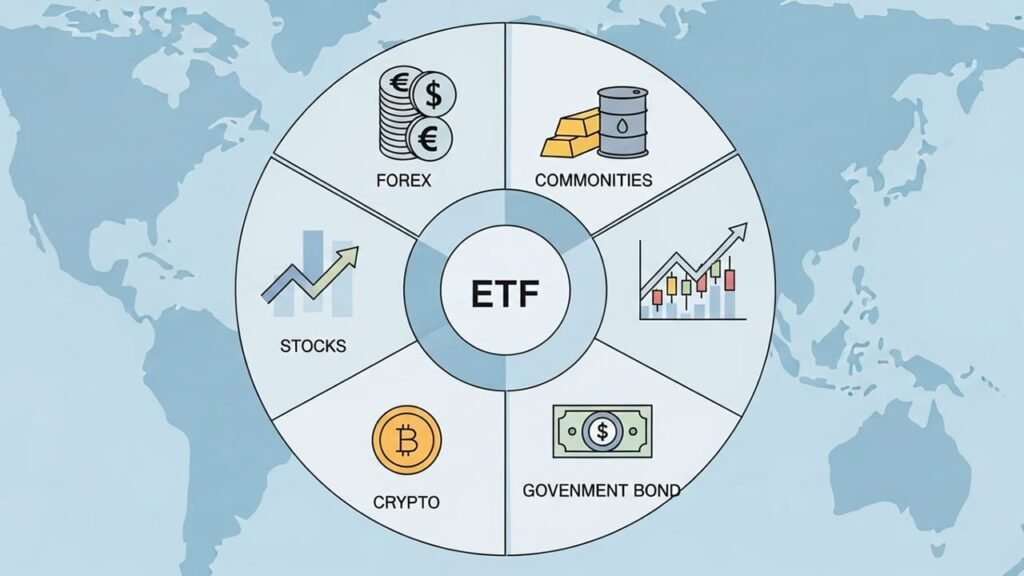
Diversification is one of the most important principles in investing. Whether you trade forex, stocks, commodities, or cryptocurrencies, spreading your investments across different asset classes helps reduce risk and improve long-term stability.
In today’s fast-moving financial world, expanding your portfolio with new market assets is easier — and more essential — than ever. This guide will show you simple, practical ways to diversify your portfolio in 2026 without feeling overwhelmed.
- Why Diversification Matters
Markets rarely move in the same direction at the same time. When one asset falls, another might rise — and diversification helps smooth out these fluctuations.
Benefits of Diversifying Your Portfolio
- Reduces overall portfolio risk
- Protects against market downturns
- Improves long-term growth potential
- Gives access to multiple opportunity cycles
- Creates more balanced returns
With new assets emerging and global markets evolving, diversification is becoming more accessible for everyday traders.
- Add Forex Pairs Outside the Majors
Most forex beginners stick to major pairs like EUR/USD or GBP/USD, but introducing additional instruments can broaden your exposure.
Easy additions to diversify:
- Minor pairs (EUR/GBP, AUD/JPY) — lower correlation to USD
- Commodity currencies (AUD/USD, USD/CAD, NZD/USD) — influenced by oil & commodities
- Safe-haven currencies (JPY, CHF) — behave differently during global uncertainty
These can reduce dependence on the U.S. dollar and smooth out volatility.
- Introduce Commodity Assets
Commodities are a great way to hedge inflation, diversify risk, and tap into global demand shifts.
Beginner-friendly commodity options:
- Gold & silver: Store-of-value assets during volatile markets
- Oil: Driven by global energy demand and geopolitical events
- Copper: Linked to manufacturing and tech growth
- Agricultural products: Corn, wheat, coffee — excellent for diversification
Many traders use commodities to hedge forex positions, especially when currencies tied to commodities fluctuate.
- Explore Stock Indices Instead of Individual Stocks
If you’re not ready to pick individual stocks, indices offer built-in diversification with less research required.
Popular indices to consider:
- S&P 500 — 500 major U.S. companies
- NASDAQ 100 — tech-focused exposure
- DAX — key European companies
- FTSE 100, CAC 40, Nikkei 225, etc.
Trading indices adds stability to your portfolio compared to investing in single, high-risk companies.
- Add Cryptocurrencies Carefully
Crypto can boost returns but should be used sparingly due to high volatility. Still, small allocations can diversify your exposure away from traditional assets.
Beginner options:
- Bitcoin (BTC): Digital store of value
- Ethereum (ETH): Infrastructure for smart contracts
- Litecoin (LTC) / Solana (SOL): Faster networks with different use cases
A small crypto allocation (1-5%) can diversify and complement your traditional investments — assuming you manage risk well.
- Use ETFs for Easy Multi-Asset Exposure
If you want instant diversification with one instrument, ETFs (Exchange-Traded Funds) are one of the simplest solutions.
Diversification ETFs include:
- Commodity ETFs (gold, oil, metals)
- Sector ETFs (technology, healthcare, energy)
- Geographic ETFs (Asia-Pacific, emerging markets)
- Bond ETFs
- Crypto ETFs (depending on jurisdiction)
ETFs make it easy to diversify without choosing individual assets manually.
- Spread Across Global Markets
Many traders unknowingly put all their investments in one region. But global markets move differently, providing opportunities across continents.
Add regional exposure such as:
- Asian markets — growth opportunities
- European markets — stability and regulation
- Emerging markets — higher risk, higher reward
- North America — largest and most liquid
Geographical diversification protects you from country-specific risks and unlocks global trends.
- Balance Your Portfolio With Bonds or Yield Instruments
While many traders focus on high-volatility assets, adding bonds or fixed-income instruments can stabilize a portfolio.
Benefits of bonds:
- Reduce overall portfolio risk
- Offer steady, predictable returns
- Often perform well during stock market downturns
Even a small bond allocation can offset risky positions in forex, stocks, or crypto.
- Match Your Diversification to Your Risk Profile
Diversification should reflect your personal goals and trading style.
Example allocations:
Conservative Portfolio
- 40% bonds
- 30% indices
- 20% commodities
- 10% forex pairs
Balanced Portfolio
- 30% indices
- 30% forex
- 20% commodities
- 10% crypto
- 10% bonds
Aggressive Portfolio
- 40% forex (including minors/exotics)
- 30% crypto
- 20% commodities
- 10% indices
Choose a mix you can manage emotionally and financially.
The Bottom Line
Diversifying your portfolio doesn’t have to be complicated. With today’s global access to forex, commodities, indices, crypto, and ETFs, traders have more options than ever before.
By spreading your investments across multiple asset classes and regions, you can:
- Reduce overall risk
- Capture more opportunities
- Improve portfolio stability
- Increase long-term performance
Diversification is not about avoiding risk — it’s about managing it intelligently.
Want more ways to strengthen your portfolio? Join the Für-Trade newsletter for weekly market insights, strategy tips, and curated updates to support smarter trading decisions.