
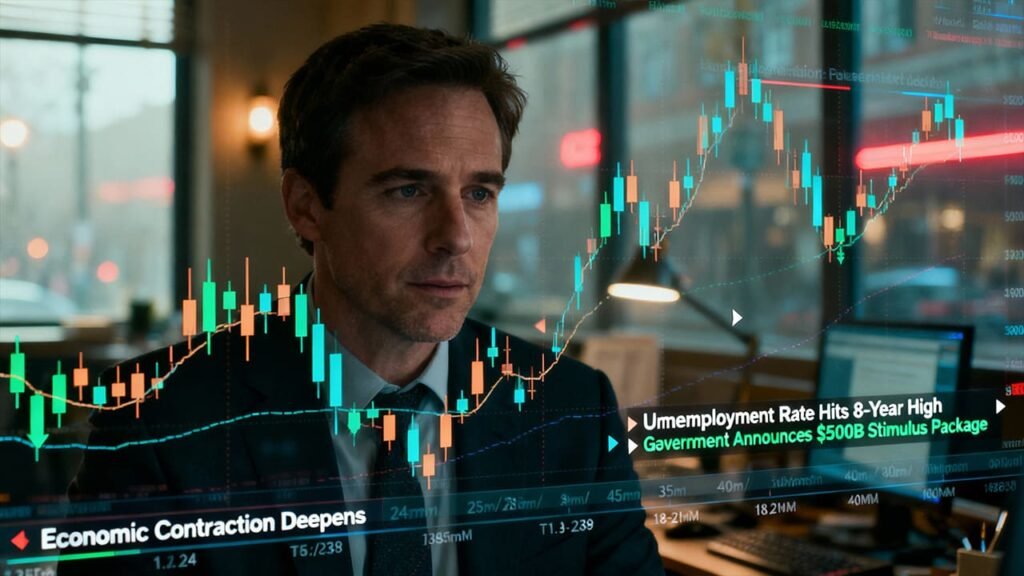
Recessions are an inevitable part of the economic cycle, and while they bring challenges, they also offer unique opportunities for forex traders. During economic downturns, currency values can be volatile, and understanding how to navigate these fluctuations can set you up for success.
In this article, we’ll explore how a recession impacts the forex market, the currencies that tend to perform well during recessions, and strategies to protect and grow your trading portfolio in tough economic times.
- What Happens to Forex During a Recession?
A recession typically leads to economic contraction, resulting in decreased consumer spending, reduced business investment, and lower GDP growth. In the forex market, these macroeconomic shifts have several direct consequences:
1.1. Currency Volatility Increases
Recessions tend to create uncertainty about economic performance, leading to higher volatility in currency markets. While some currencies will weaken due to economic weakness, others may strengthen as traders look for safer assets.
1.2. Central Bank Policy Changes
To counter a recession, central banks often adjust monetary policy — either by lowering interest rates to stimulate economic growth or, in extreme cases, by printing money (quantitative easing). These moves directly impact the forex market, as they affect currency supply and demand.
1.3. Demand Shifts
During a recession, consumer spending drops, leading to reduced demand for imports and exports. This can affect countries’ trade balances and currency values. For example, countries with large trade deficits may see their currencies weaken as demand for imports falls.
- Currencies That Tend to Perform Well During a Recession
During recessions, certain currencies are more likely to strengthen or hold their value due to their safe-haven status or strong underlying economic conditions. These currencies include:
2.1. The U.S. Dollar (USD)
The USD is often considered the ultimate safe haven in times of global financial uncertainty. This is largely due to the U.S.’s global economic influence, the size of its economy, and the dollar’s role as the world’s reserve currency.
- Why it works during a recession: Investors flock to the dollar in times of market stress due to its liquidity and stability.
- How to trade: Look for opportunities to go long USD against weaker currencies in times of global economic stress.
2.2. The Japanese Yen (JPY)
The JPY is another currency that typically strengthens during recessions. Japan’s economy is highly dependent on exports, and during global downturns, the country’s central bank often takes actions that boost the yen.
- Why it works during a recession: The Yen benefits from its safe-haven status and low-interest rates that make it an attractive currency for investors seeking stability.
- How to trade: When global risk-off sentiment increases, you can consider buying the yen against riskier currencies, like the AUD or GBP.
2.3. The Swiss Franc (CHF)
Switzerland is known for its political stability and strong financial system, which makes the Swiss Franc a safe haven in uncertain times.
- Why it works during a recession: The CHF tends to appreciate during periods of global economic instability due to its low inflation and safe-haven appeal.
- How to trade: As with the yen, CHF often gains during economic downturns. Consider long CHF positions against EUR or USD when recession fears are high.
2.4. Gold (XAU/USD)
Though not a traditional currency, gold is often considered a form of money and a store of value. During a recession, demand for gold can increase, driving its price higher.
- Why it works during a recession: Gold tends to rise when confidence in fiat currencies falls, particularly in uncertain economic climates.
- How to trade: Consider trading XAU/USD for exposure to gold’s upside in recessionary periods.
- How to Trade Forex During a Recession: Key Strategies
3.1. Focus on Safe-Haven Currencies and Assets
During recessions, safe-haven currencies like the USD, JPY, and CHF are likely to outperform others. A strategy of buying safe-haven currencies while shorting weaker currencies can be profitable. Gold can also act as a safe-haven asset during periods of high volatility.
3.2. Follow Central Bank Policies Closely
In times of recession, central banks often make significant policy changes. Monitoring central bank meetings and announcements is crucial. Look for:
- Interest rate cuts from central banks, which can weaken currencies.
- Quantitative easing policies that inject liquidity into the market, affecting currency values.
Use economic calendars to track these events and adjust your trading strategy accordingly.
3.3. Trade with a Risk-Managed Approach
Recessions introduce market uncertainty, so using proper risk management strategies is essential. This includes:
- Using stop-loss orders to limit potential losses.
- Position sizing based on the increased volatility of the market.
- Hedging positions when appropriate to protect against unexpected moves.
3.4. Use Volatility to Your Advantage
Volatile markets present both challenges and opportunities. During a recession, large price swings often occur in forex pairs. Traders who can manage volatility effectively can profit from these rapid price changes by:
- Trading short-term volatility using scalping or day trading strategies.
- Fading extreme moves (trading against the trend) when market sentiment overreacts.
3.5. Look for Economic Data to Guide Your Strategy
Key economic data releases, such as GDP growth, unemployment figures, and inflation reports, can give insight into the health of economies during a recession.
- GDP: A slowdown in GDP growth signals recessionary conditions.
- Unemployment: Rising unemployment often worsens recession fears, which may drive safe-haven flows.
- Inflation: High inflation could worsen recessionary pressures, creating opportunities in commodities like gold.
- Managing Your Portfolio During a Recession
When trading forex during a recession, it’s essential to manage your overall portfolio risk carefully. This involves:
- Diversification: Spread your investments across different asset classes (forex, commodities, equities) to reduce risk.
- Focus on liquidity: Ensure that your trades can be quickly exited without significant slippage, especially in highly volatile markets.
- Consider long-term strategies: During recessions, it can be helpful to incorporate a buy and hold strategy for safe-haven currencies or assets like gold.
- The Bottom Line
Recessions create unique challenges but also offer tremendous opportunities for savvy forex traders. By focusing on safe-haven currencies, monitoring central bank actions, and managing risk, you can navigate the volatility and position yourself for success.
Remember, economic downturns tend to produce major market swings. With the right strategies, these swings can work in your favor, but only if you’re well-prepared and disciplined.
Want to learn more about trading during uncertain times? Join the Für-Trade newsletter for regular insights, economic updates, and expert strategies to navigate recessionary markets.