
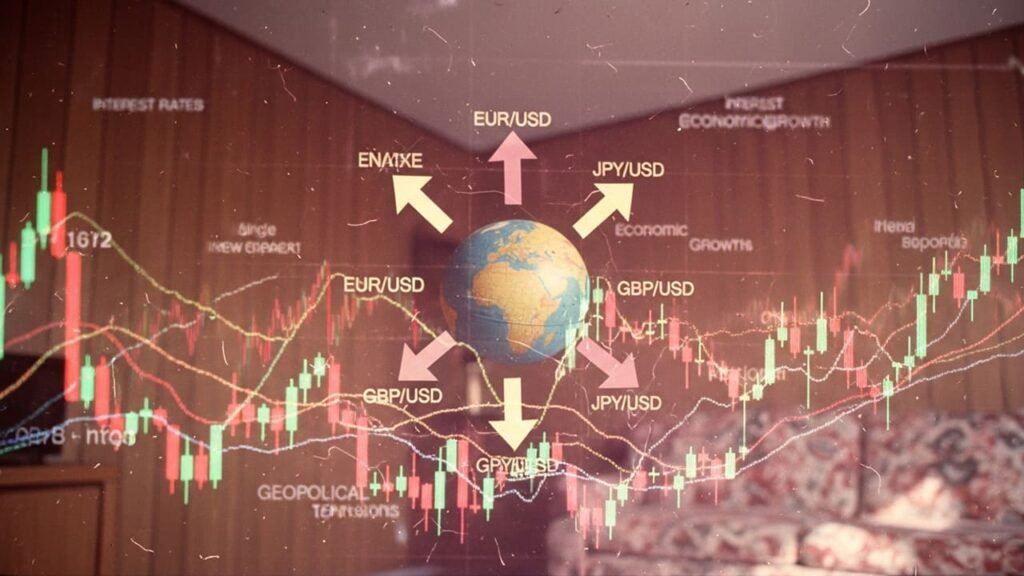
The global financial landscape has undergone significant changes over the past few years. From the COVID-19 pandemic to geopolitical tensions and supply chain disruptions, these events have reshaped markets in ways that were previously unimaginable. As the world moves into the post-global disruption era, traders and investors are left wondering how the forex market will evolve and what new trends will define trading strategies.
In this article, we’ll explore the key factors influencing the forex market in 2026 and beyond, as well as how traders can adapt to the changing environment.
- The Impact of Global Disruptions on the Forex Market
1.1. Volatility and Market Sentiment
The forex market has experienced increased volatility due to the uncertainty created by global events. For example, during the early stages of the COVID-19 pandemic, forex markets saw wild fluctuations as traders reacted to economic shutdowns, fiscal stimulus packages, and central bank interventions.
- Volatility: High market volatility can present both opportunities and risks. Currency pairs like EUR/USD and GBP/USD became highly sensitive to news events, with traders using both technical and fundamental analysis to navigate erratic price movements.
As we move forward, volatility is expected to remain a key characteristic of the forex market, although its nature might change. Risk-on and risk-off market sentiment will continue to drive currencies, but geopolitical tensions, inflation, and the global recovery will shape the direction of price movements.
1.2. Global Economic Recovery and Central Bank Policy
The economic recovery from global disruptions will be a major factor in shaping the forex market in 2026. Central banks, particularly the U.S. Federal Reserve, European Central Bank (ECB), and Bank of Japan (BoJ), will play a critical role through their monetary policies.
- Interest Rates and Inflation: Central banks are likely to raise interest rates as inflationary pressures continue to build, especially in the U.S., Europe, and parts of Asia. This could lead to higher returns on certain currencies and stronger currencies like the U.S. Dollar or the Euro.
- Quantitative Easing: Some regions may continue using quantitative easing (QE) measures to support recovery, which could weaken currencies in the long term.
Forex Opportunity: Traders should closely monitor interest rate decisions, economic growth indicators, and inflation reports to anticipate currency trends and make informed decisions.
- Key Forex Trends Post-Disruption
As the global economy recovers, several key trends are likely to shape the forex market:
2.1. Digital Currencies and the Rise of CBDCs
Central bank digital currencies (CBDCs) are poised to play a significant role in the forex market. As countries like China, the EU, and the U.S. experiment with CBDCs, the introduction of digital yuan or digital euro could impact currency flows and influence exchange rates.
- Example: The digital yuan (e-CNY) has already been launched for pilot programs, and many experts predict it will affect the Chinese economy’s relationship with the dollar and other major currencies.
Forex Opportunity: Traders should watch for updates on CBDC adoption and the potential influence these digital currencies may have on traditional fiat currencies.
2.2. Strengthening of Regional Currencies
As global disruptions ease, we may see a resurgence in regional currencies tied to emerging economies, such as the Indian Rupee (INR), Brazilian Real (BRL), and South African Rand (ZAR). These economies may benefit from:
- Higher commodity prices (e.g., oil, gold)
- Strong demand for goods and services
- Rebuilding efforts from the pandemic and supply chain disruptions
The commodity-linked currencies (AUD, CAD, NZD) are likely to benefit from higher demand for natural resources as the global economy recovers and commodity prices rise.
Forex Opportunity: Look to trade commodity-linked currencies as global demand rebounds, but stay cautious of political risks and inflationary pressures in emerging markets.
2.3. The Return of Carry Trades
As interest rates normalize, carry trades (borrowing in low-interest-rate currencies and investing in high-interest-rate currencies) are expected to make a comeback. In the post-global disruption era, traders may look for currency pairs that offer attractive yield differentials.
- Example: The U.S. Dollar (USD), New Zealand Dollar (NZD), and Australian Dollar (AUD) could be attractive for carry trades, with low borrowing rates in JPY or EUR.
Forex Opportunity: Watch for interest rate decisions and central bank comments to identify potential carry trade opportunities in 2026.
- How to Adapt Your Trading Strategy to the Post-Disruption Era
3.1. Stay Informed and Flexible
Global economic recovery from disruptions is not linear. Events such as geopolitical tensions, pandemics, and financial crises can trigger sudden market shifts. As a trader, staying informed through reliable news sources and economic calendars will help you react to changes quickly.
- Tip: Keep an eye on central bank meetings, economic data releases, and geopolitical events that could trigger volatility.
3.2. Focus on Risk Management
In times of uncertainty, risk management becomes even more critical. A market shift can happen in a flash, and without stop-losses or proper position sizing, even a single trade can have a lasting impact on your portfolio.
- Stop-loss orders and take-profit targets should be set with market volatility in mind.
- Position sizing should be adjusted to reduce risk exposure, especially when trading in uncertain times.
3.3. Embrace Technology and Algorithmic Trading
In the post-disruption era, technological tools such as algorithmic trading, artificial intelligence (AI), and automated strategies will help traders navigate volatile markets with greater precision. These tools can help identify patterns, execute trades faster, and minimize emotional decision-making.
- AI-powered tools can analyze vast amounts of data, making it easier to predict potential market movements and adjust strategies accordingly.
3.4. Diversify Your Portfolio
Given the unpredictability of the post-disruption era, diversification is a strategy that every trader should adopt. Spreading your trades across different currencies, commodities, and assets will help balance risk while positioning you to take advantage of market opportunities.
- Forex diversification includes trading majors, minors, and emerging market currencies.
- Commodity diversification involves exposure to precious metals, energy, and agricultural products.
- Conclusion: Preparing for the Post-Disruption Era
The forex market in 2026 will be influenced by several factors, including economic recovery, interest rate policies, and geopolitical stability. While volatility will remain, the opportunities for traders are vast.
By staying informed, flexible, and disciplined, you can navigate these changes effectively. Focus on managing risk, diversifying your portfolio, and adjusting your trading strategy to reflect the shifting economic landscape.
Want to stay ahead of the curve in 2026? Join the Für-Trade newsletter for weekly insights, forex market updates, and expert trading strategies to help you thrive in the post-global disruption era.